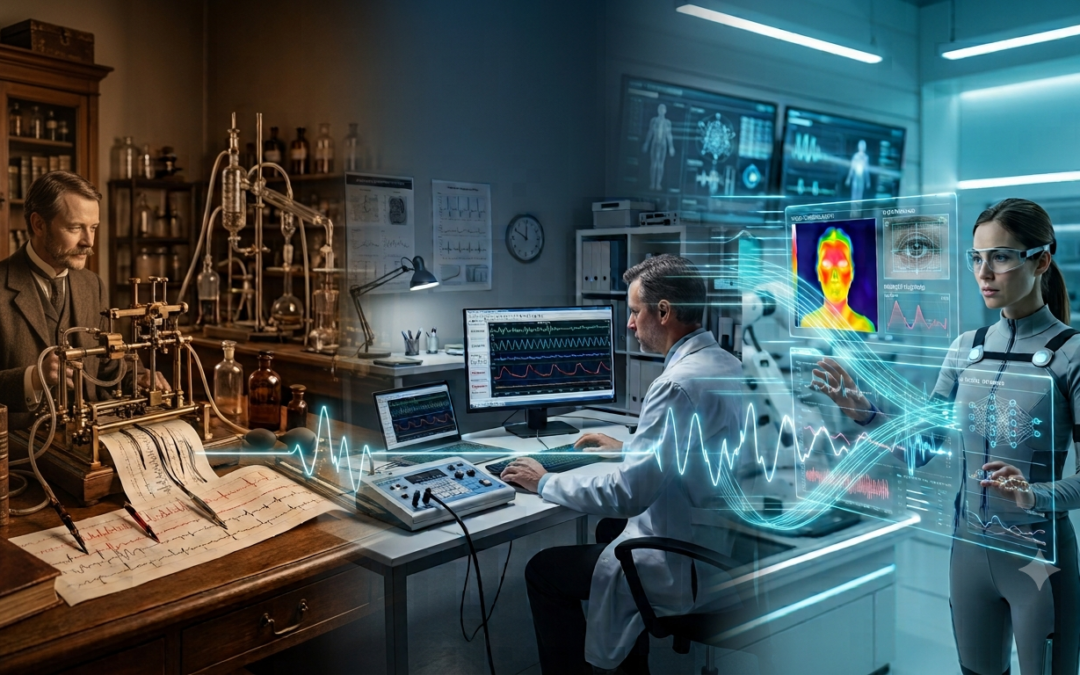
From Mechanical Physiometry to Biometric Disruption and Artificial Intelligence
INTRODUCTION AND PRESENTATION
At the intersection of behavioral science, neurophysiology, and procedural law, few instruments have generated as much controversy, fascination, and, at the same time, profound misinformation as the polygraph. For decades, popular culture and media sensationalism have distorted the true nature of this technology, reducing it to the caricaturish myth of «the lie detector.»
However, for forensic psychophysiology professionals, accredited examiners, expert witnesses, law enforcement investigators, and intelligence consultants, the reality is vastly different. The polygraph does not read minds, nor does it detect lies directly; it is a multiparameter scientific measuring instrument designed to record involuntary autonomic nervous system fluctuations in response to controlled verbal stimuli.
Why Is It Urgent and Necessary to Address This Topic Today?
There is a critical gap in current technical literature and professional debate that makes the publication of this work imperative:
- Stagnation in Manufacturing Engineering: While medical and consumer technologies (wearables, biosensors, nanotechnology) have advanced by leaps and bounds, commercial polygraphy instruments appear to have remained trapped in a rigid industrial architecture for the last two decades.
- Market Distortion and Monopolies: The educational and commercial hegemony of certain actors in the United States, compounded by complex geopolitical export regulations (such as BIS/EAR licensing), has heavily conditioned the global distribution of equipment. At the same time, the international private sector is undergoing a profound transformation driven by the expansion of European training standards.
- The Proliferation of «Black Box» Systems: Commercial intrusion has encouraged the appearance of re-branded devices and proprietary software lacking scientific validation or algorithmic auditability. This represents a grave risk to the admissibility and evidentiary validity of expert testimony in court.
- Imminent Technological Disruption: The arrival of Artificial Intelligence, pre-interview analytical processing, and novel non-invasive optical sensors (Doppler laser, thermal imaging, eye-tracking) will completely redefine the field in the coming years, with a key player emerging on the biomedical manufacturing horizon: the Asian tech industry.
- The Non-Negotiable Ethical Framework of This Work: This analysis is built upon an unyielding ethical premise: the polygraph is an auxiliary credibility assessment tool whose use must strictly conform to applicable domestic laws, scrupulous respect for fundamental human rights, and the absolute principle of the examinee’s voluntariness. It does not replace forensic investigation or judicial evidence; it complements them with empirical rigor.
PART I: The Physiological Genesis and the Mechanical Era (The Past)
The scientific assessment of credibility was not born with computer science or modern cybernetics; its roots lie deep in the physiological revolution of the late 19th century. Long before the formal concept of a «polygraph» existed, experimental medicine and psychology discovered a fundamental principle: the human body reacts involuntarily and uncontrollably to cognitive load, emotional stress, and the conscious attempt to deceive.
1.1 The Scientific Foundations of Psychophysiology
The development of the polygraph was not the work of a single inventor, but rather the convergence of three fundamental biomechanical breakthroughs: cardiovascular recording, respiratory pattern analysis, and skin electrical resistance response.
Historical Foundations of Psychophysiological Parameters
| Researcher | Period | Device / Technique | Recorded Physiological Parameter |
| Angelo Mosso | 1875 – 1895 | Hydrosphygmograph | Peripheral blood volume and pulse rate |
| Vittorio Benussi | 1914 | Pneumograph & I/E Ratio | Inspiration/Expiration respiratory ratio |
| William M. Marston | 1915 | Standard Sphygmomanometer | Discontinuous systolic blood pressure |
Angelo Mosso and the Hydrosphygmograph (1875–1895)
Italian physiologist Angelo Mosso was the first to empirically demonstrate how fear and mental tension alter blood flow and cardiac rhythm. Using the hydrosphygmograph—a water-filled cylinder into which the subject inserted their arm or hand—Mosso successfully measured variations in peripheral blood volume (volume plethysmography) elicited by emotional stimuli. His experiments demonstrated that when the brain processes a threatening stimulus or high cognitive demand, blood is redistributed from the extremities toward the central nervous system.
- Conceptual Milestone: Mosso established that blood circulation does not merely respond to physical exertion, but also to internal mental states and psychological processes.
Vittorio Benussi and the Respiratory Quotient (1914)
At the University of Graz, Italian psychologist Vittorio Benussi introduced the pneumograph into deception research. Benussi measured inspiration and expiration times using flexible bellows secured around the subject’s chest. He discovered that when a person responds truthfully, the ratio between inspiration time and expiration time (I/E ratio) remains within a consistent proportion; however, when the subject lies, the I/E ratio changes significantly immediately following the deceptive response.
William Moulton Marston and Discontinuous Systolic Pressure (1915)
Marston, a Harvard graduate renowned for his work in theoretical psychology, developed the discontinuous systolic blood pressure test. Utilizing a standard blood pressure cuff (sphygmomanometer) and a stethoscope, Marston took periodic, manual readings of the subject’s systolic blood pressure throughout interrogation sessions. He proved that sharp, sustained rises in systolic blood pressure correlated directly with the utterance of deceptive answers.
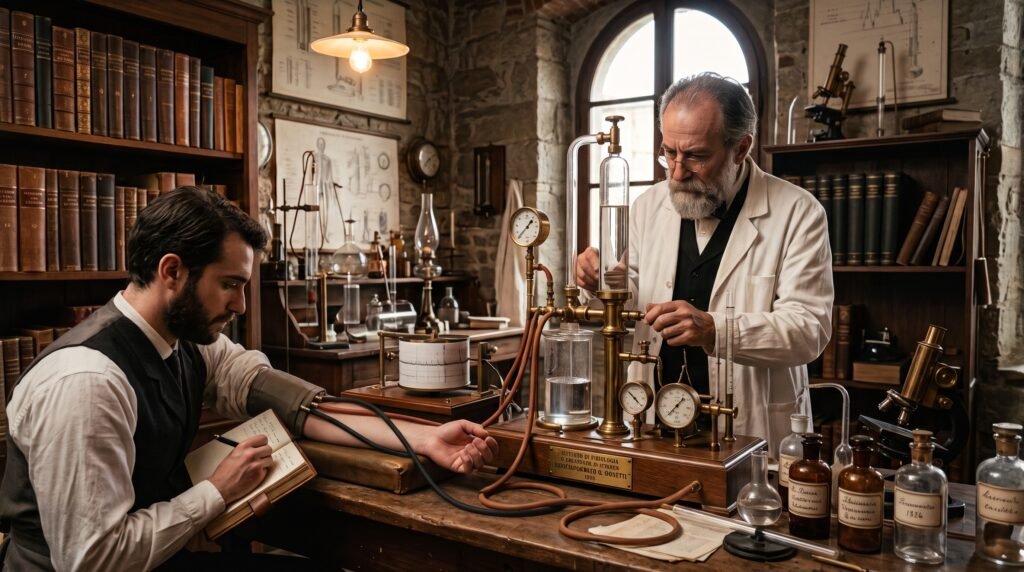
Figure 1.1: Historical representation of pioneer experiments in vascular physiometry during the 19th century.
1.2 Invention of the Field Instrument: John A. Larson (1921)
Despite the breakthroughs of Mosso, Benussi, and Marston, their measurements were performed in isolation, intermittently, and within non-operational laboratory environments. The true revolution in forensic polygraphy occurred at the Berkeley Police Department (California) under the leadership of visionary Police Chief August Vollmer.
In 1921, psychiatrist and police officer John Augustus Larson built the first instrument capable of continuously, simultaneously, and in real time recording multiple physiological variables.
Key Features of Larson’s «Breadboard Polygraph»:
- Simultaneous Multichannel Recording: Integrated continuous monitoring of heart rate/blood pressure and respiratory rhythm into a single physical unit.
- Continuous Mechanical Tracing: Replaced Marston’s discontinuous readings with mechanical pens that continuously traced signals onto a smoked drum driven by a clockwork mechanism (kymograph).
- Practical Application in Real Investigations: For the first time, psychophysiological tracings were not merely academic experiments, but actionable forensic evidence evaluated within real-world criminal investigations.
1.3 Commercial Consolidation and Innovation: Leonarde Keeler (1925–1938)
If Larson was the scientific father of the field polygraph, Leonarde Keeler (who worked alongside Larson in Berkeley) was the engineering and industrial design genius who standardized the tool into its classic analog architecture.
Keeler’s Three Fundamental Contributions:
- Incorporation of the Galvanic Skin Response (GSR/EDA): In 1938, Keeler formally added the critical third channel to the instrument: the skin resistance galvanometer (Psychogalvanometer). This channel recorded activity variations in eccrine sweat glands, which are regulated exclusively by the sympathetic nervous system.
- Replacement of Smoked Paper with Ink and Continuous Paper: Keeler introduced an electric motor traction system that pulled a roll of ruled paper beneath capillary-fed fountain pens, drawing continuous waves for each physiological channel.
- Creation of the Portable Commercial Polygraph: With the manufacture of the iconic Keeler Model 302, polygraphy transitioned from a handcrafted prototype into a standardized industrial product housed inside a portable carrying case, ready for field deployment.
1.4 Technical Anatomy and Challenges of the Mechanical Era
Technical Breakdown of Analog Components and Failure Modes
| Analog Component | Mechanical Operating Principle | Critical Challenge / Failure Point |
| Pneumograph | Corrugated rubber tubes connected to a metal capsule (tambour). | Thermal expansion/contraction from ambient temperature and air leaks at rubber junctions. |
| Cardiograph | Inflatable blood pressure cuff linked to high-precision beryllium-bronze bellows. | Loss of bronze elasticity over time; physical discomfort and arm numbness in examinees. |
| Galvanometer (GSR/EDA) | Wheatstone Bridge circuit powered by dry cell batteries linked to a moving coil. | Recalibration drift due to battery depletion or unstable skin-electrode impedance. |
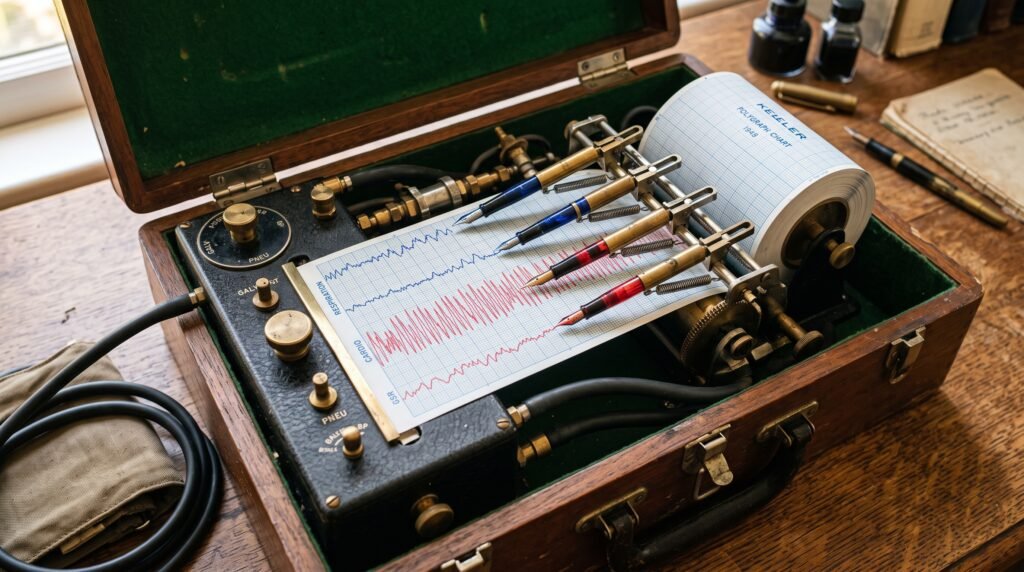
Figure 1.2: Analog ink-and-paper polygraph housed in a wooden briefcase (Keeler Era, 1940s).
PART II: Market, Geopolitics, and Commercial Dominance (The Present)
The modern landscape of forensic psychophysiology is shaped by a dual reality: on one hand, rigorous technical standardization guaranteed by international ASTM standards and major professional associations; on the other, an intense geopolitical and commercial struggle for control of the global market.
2.1 The «Big Four» Industry-Validated Manufacturers (APA/ASTM Standard)
Currently, the benchmark market is dominated by four U.S. manufacturers recognized by the American Polygraph Association (APA):
- Lafayette Instrument Company (Global Market Leader): Founded in Indiana (USA), it is the dominant global benchmark. Its LX6 and LX7 models stand out for their 32-bit A/D conversion, Fischer® quick-release connectors, and the LXEdge software suite featuring integrated empirical algorithms such as OSS-3, PolyScore, and ESS-M.
- Limestone Technologies (High-Resolution Excellence): Acquired by Lafayette in 2022, it is celebrated for its ParagonX model, featuring a record native sampling rate of 625 samples per second per channel and industrial Lemo® connectors.
- Stoelting Co. (Forensic Computing Pioneers): Creators of the CPS Elite, a system featuring a standalone acquisition console equipped with an independent LCD touchscreen for direct signal verification.
- Axciton Systems: Known for the mechanical and electronic robustness of its sensors and its proprietary STAR (Scientific Test Analysis Report) scoring algorithm.
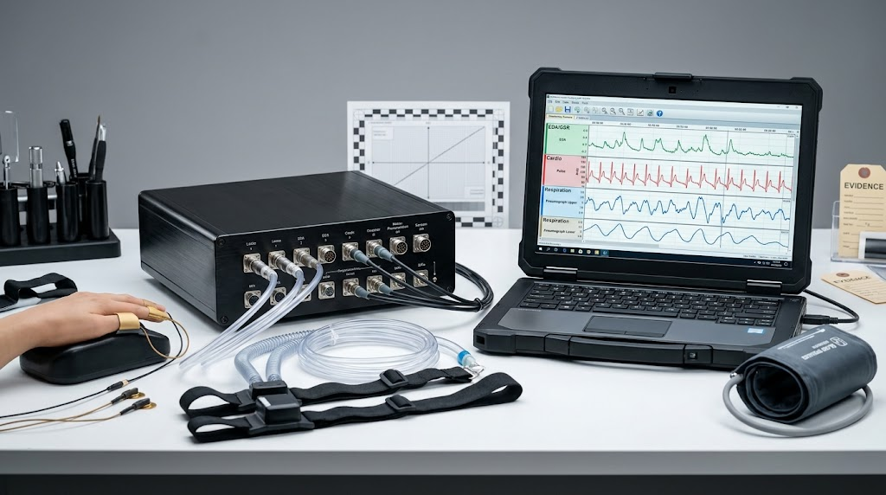
Figure 2.1: Modern computerized polygraph station featuring a Data Acquisition System (DAS) interface, laptop computer, and biotransducers.
Technical Specifications Comparative Matrix
| Manufacturer / System | Input Channels | Sampling Rate | Connector Type | Primary Algorithms |
| Lafayette LX6 / LX7 | 10 channels | 360 samples/sec (total) | Fischer® Quick-Release | OSS-3, PolyScore, ESS-M |
| Limestone ParagonX | 9 channels | 625 samples/sec/channel | Lemo® Industrial | Paragon / LXEdge Suite |
| Stoelting CPS Elite | 5 to 8 channels | 360 samples/sec | Standard Medical Grade | CPS Fusion Scoring |
| Axciton System | 5 to 8 channels | Digital Multichannel | High-Durability Proprietary | STAR Algorithm |
2.2 The Lafayette vs. Limestone Commercial War and the Geopolitical Factor (BIS-711 / EAR)

Figure 2.2: Polygraph equipment in an export and customs regulation context under ECCN / EAR controls.
- The Brake of U.S. Export Controls (ECCN 3A981 / BIS-711): U.S.-based manufacturers are subject to strict export licensing enforced by the Bureau of Industry and Security (BIS), which delays or restricts the delivery of systems to specific international government and commercial entities.
- Canada’s Competitive Advantage: Based in Ontario, Limestone Technologies operated free from BIS/EAR regulatory constraints, allowing it to rapidly capture and dominate key segments of the international private sector.
- The 2022 Acquisition: In August 2022, Lafayette acquired Limestone Technologies, effectively absorbing its strongest innovator and consolidating a de facto market monopoly.
2.3 The Institutional Landscape and the Private Training Shift (APA vs. EPA)
This work exclusively recognizes the scientific authority of two global organizations:
- APA (American Polygraph Association)
- EPA (European Polygraph Association / Europolygraph)
The Paradigm Shift (<1,500 Affiliates Gap):
The European Polygraph Academy has outpaced traditional American academies in the volume of students trained for the international private sector. This rapid expansion has narrowed the active member gap between the APA and the EPA to less than 1,500 active professionals, rebalancing the geopolitical center of gravity in forensic polygraphy.
2.4 Regional Manufacturers and the Homologation Filter
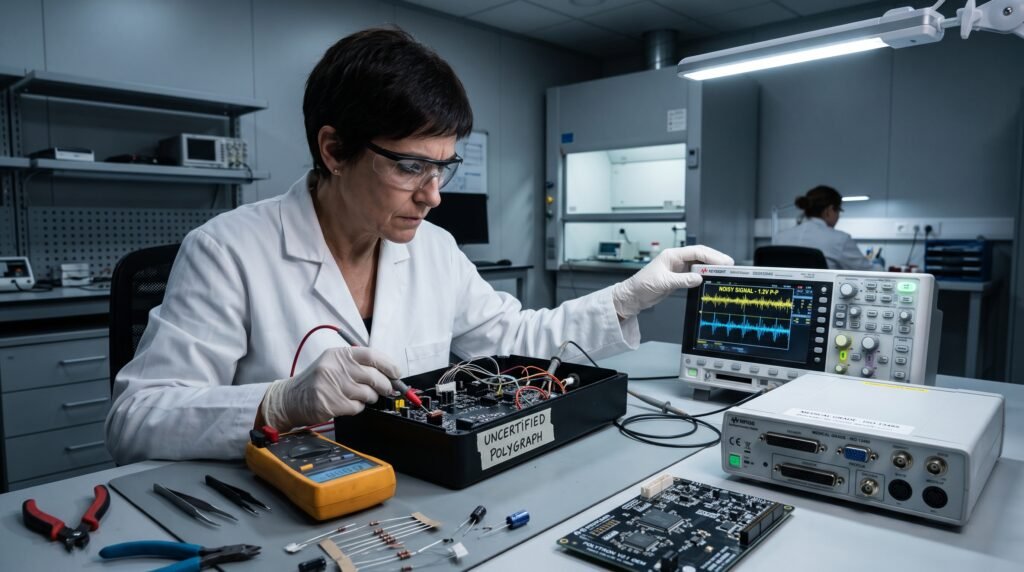
Figure 2.3: Laboratory technical inspection of non-certified circuits from secondary brands.
- Regional Systems: Notable regional equipment includes Rubicon (Ukraine), Diana / NPO Polyconius (Russia), and traditional field units.
- The Critical Risk of the B.E.A.R. System: Neither the APA nor the EPA (Europolygraph) endorses or accepts the use of the B.E.A.R. system. The device lacks ISO hardware traceability (functioning as re-branded «white label» hardware) and relies on automated «black box» algorithms that have not been published or validated in peer-reviewed scientific journals. Using such unvalidated equipment exposes expert witness reports to immediate judicial disqualification and evidentiary suppression.
PART III: Critical Anatomy of the «State of the Art» (Manufacturing Deficiencies and Financial Paradox)
3.1 Why Is the Current Polygraph Not «High-End»?
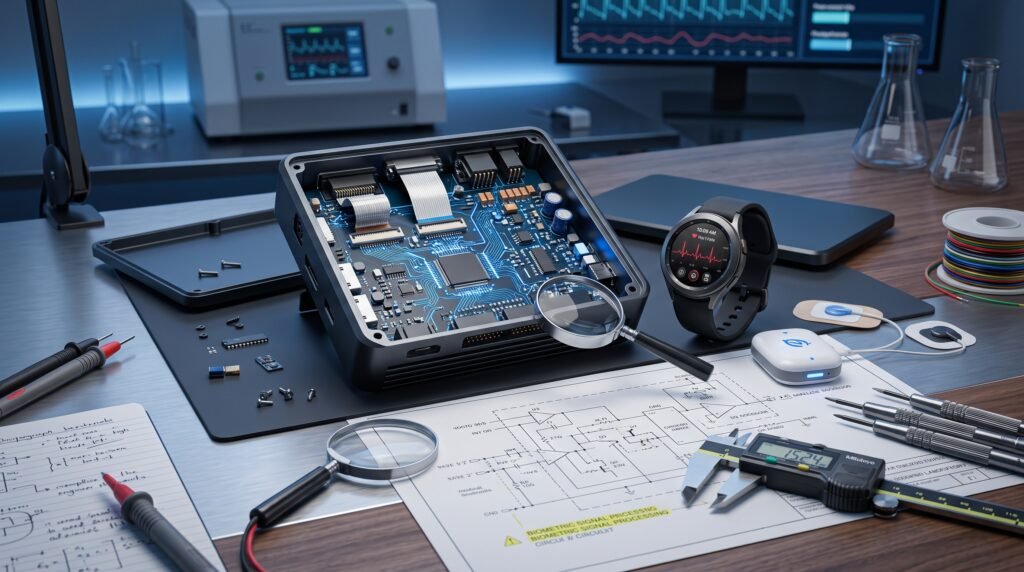
Figure 3.1: Comparison between traditional polygraph consoles and next-generation biomedical devices.
Despite marketing claims, current polygraph hardware suffers from several structural engineering limitations:
- Anachronistic Cabling: Heavy reliance on thick, shielded cables that act as physical levers, transmitting mechanical micro-vibrations directly to the sensors and generating movement artifacts in the tracings.
- Rigid Physical Interfaces: Extruded aluminum consoles function merely as glorified analog-to-digital converter boxes, delegating all processing tasks to the host laptop without onboard analytical intelligence.
- Lack of Integrated Smart Microprocessors: Absence of real-time edge computing within individual sensors to perform automatic self-calibration, impedance checking, or local signal filtering before USB transmission.
3.2 Technical Analysis of Critical Components: The Cuff and EDA
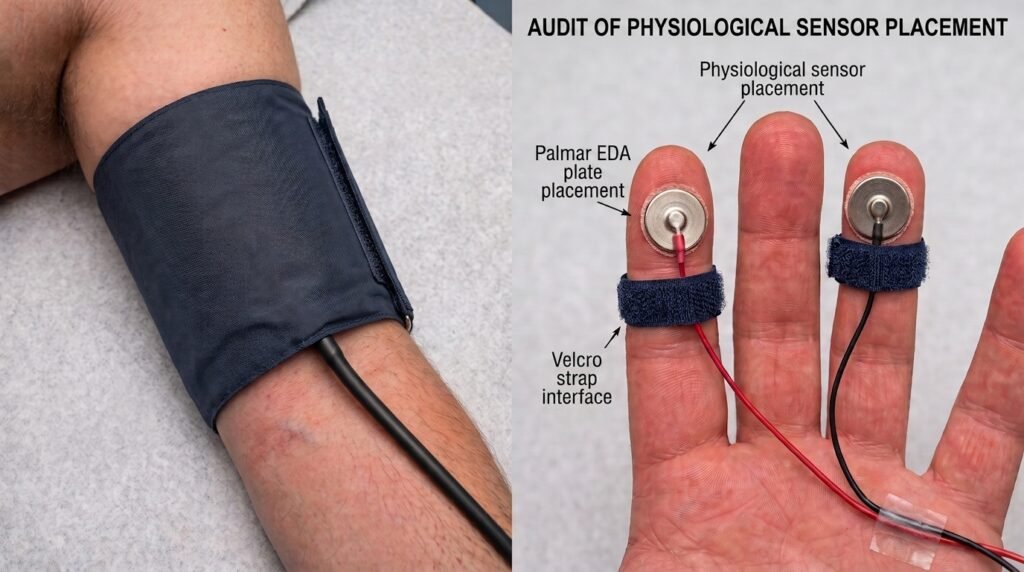
Figure 3.2: Arterial occlusion induced by the traditional blood pressure cuff and rigid EDA electrode plates.
The Cardiovascular Occlusive Cuff
The standard blood pressure cuff must remain inflated to 60–90 mmHg for several minutes per chart. This prolonged compression induces localized ischemia, pain, and hyperalgesia in the subject’s arm. The resulting physical distress artificially inflates baseline autonomic arousal and frequently triggers involuntary movement artifacts, contaminating the cardiosphygmograph channel.
Velcro® EDA Electrodes
Traditional solid metal plates secured with Velcro® straps lack constant contact pressure dynamics. As sweat accumulates irregularly beneath the solid metal surfaces, it causes baseline signal drift or sudden saturation spikes that distort electrodermal response (EDR) calculations.
3.3 Financial Breakdown: Real Manufacturing Cost (BOM) vs. Commercial Price (Case Study: Next-Gen US-Made Polygraph)
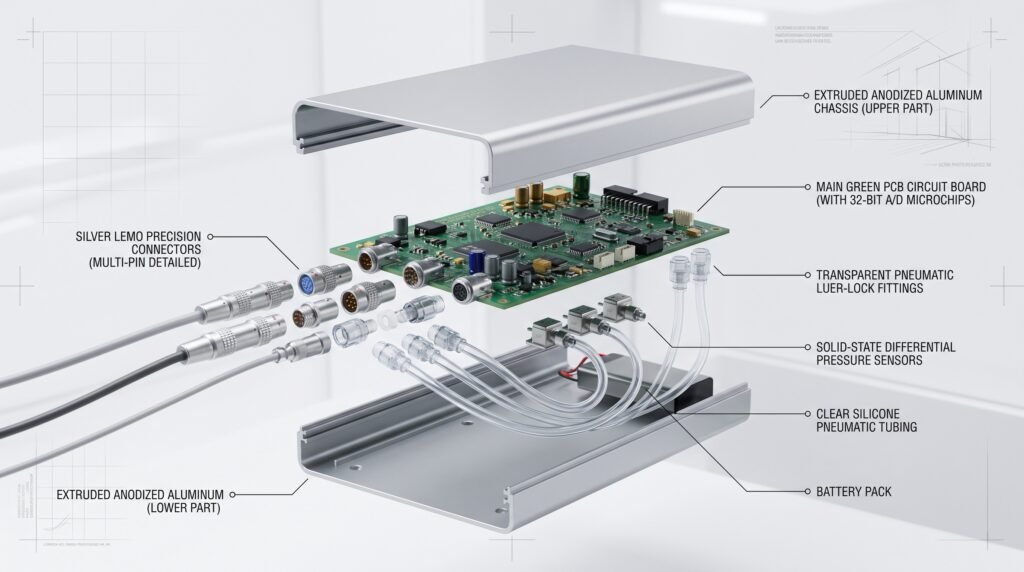
Figure 3.3: Exploded-view diagram of internal electronic components in a computerized polygraph system.
Real Component Cost Table (Bill of Materials – BOM)
| Internal System Component | Technical & Industrial Description | Approx. Production Cost (USD) |
| Main Circuit Board & A/D Converter | 32-bit microcontroller, high-res A/D conversion chips, USB interface bus, and signal filtering components. | $60 – $110 |
| Enclosure & Chassis | Anodized extruded aluminum casing with laser-etched panels. | $25 – $40 |
| Input Connector Suite | Industrial precision metal circular connectors (LEMO® or quick-release pneumatic-electric suite). | $80 – $150 |
| Pneumatic Sensors (Dual Neumo) | Solid-state differential pressure transducers, Luer-Lock fittings & internal silicone tubing. | $30 – $60 |
| Galvanic EDA Board | Optically isolated skin conductance/resistance measurement circuit & shielded cabling. | $15 – $35 |
| Vascular Module (Cardio + PPG) | High-stability pneumatic pressure transducer for Cuff & infrared photoplethysmography (PPG) sensor. | $40 – $80 |
| Countermeasure Sensor (Motion) | Piezoelectric pressure transducer pad sensor for movement detection. | $30 – $50 |
| Assembly, QA Calibration & Case | Assembly labor, factory quality control testing, calibration certification, and rugged transport case. | $70 – $120 |
| TOTAL MANUFACTURING COST (BOM) | Real estimated cost per complete field unit | $350 – $645 USD |
FINANCIAL REALITY: While the physical direct manufacturing cost (BOM + Assembly) of a flagship next-generation US-made polygraph ranges from $350 to $645 USD, its baseline retail price sits between $9,000 and $12,000 USD. However, the expense does not end there: once mandatory logistics expenses—such as specialized packaging, international freight, customs duties, tariffs, and local sales tax (VAT)—are factored in, the total final cost to the buyer frequently exceeds $14,000 USD. This results in an end-user accumulated markup exceeding 2,000% compared to the actual physical value of the hardware received.
3.4 The Imperative Need for Transparency and Open Formats
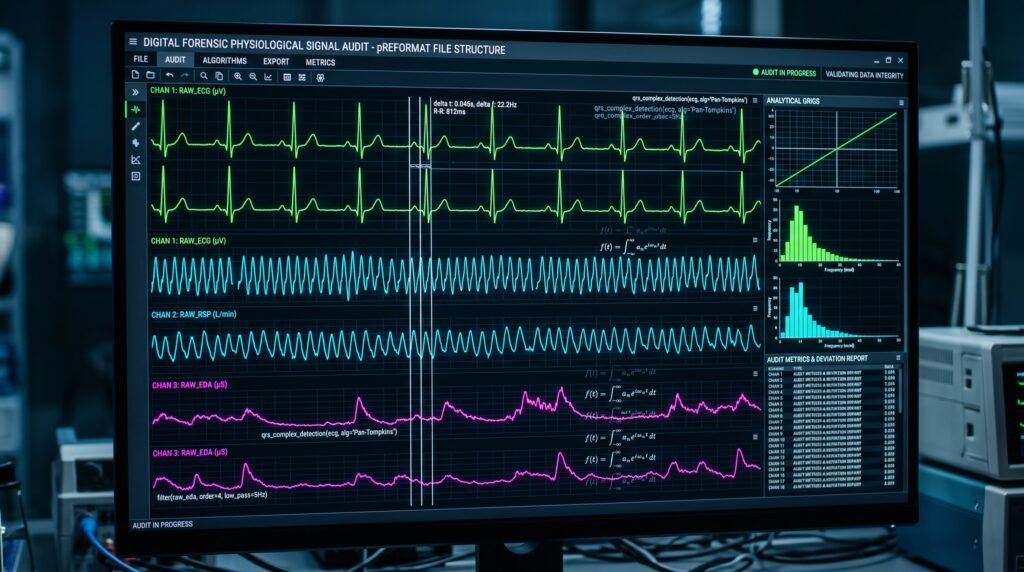
Figure 3.4: Foresic analysis screen displaying open .pREFORMAT file structures for expert witness auditing.
- The .pREFORMAT Standard: The industry urgently requires open data file standards so recorded raw physiological charts can be independently audited by neutral third-party forensic experts without vendor lock-in software.
- Empirical Algorithm Validation: Complete rejection of closed «black box» scoring models that lack fully transparent mathematical documentation published in peer-reviewed scientific journals.
PART IV: The New Biometric Frontier and the Polygraph of Tomorrow (The Future)
4.1 The Rollout of the Giant: Technological Disruption from China
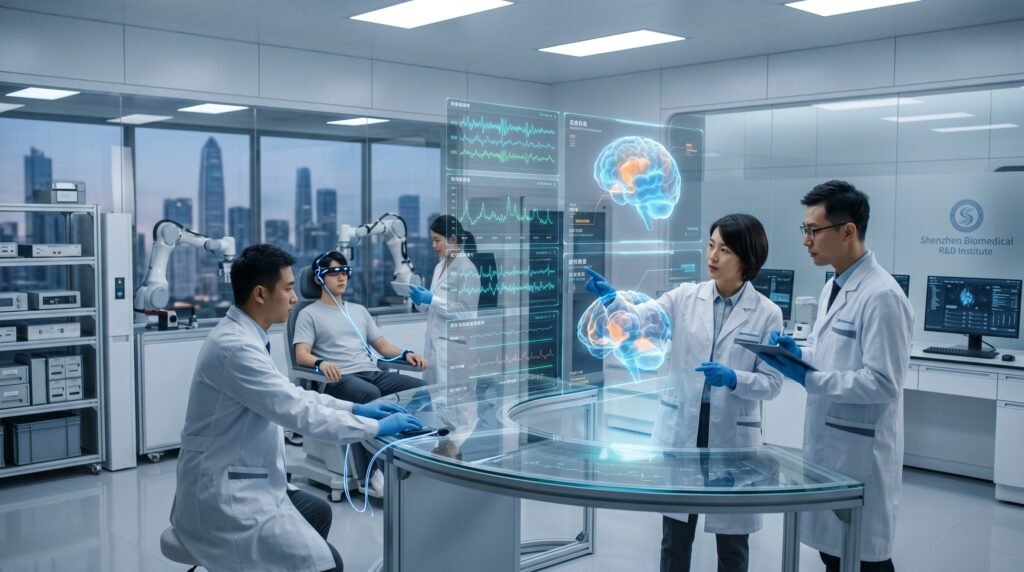
Figure 4.1: Smart psychophysiological instrumentation development center in Shenzhen.
The ecosystem spanning Shenzhen, Guangzhou, and Hangzhou will lead the next generation of hardware thanks to its agility in prototyping, leadership in remote photoplethysmography (fPPG), and capacity to democratize manufacturing costs.
4.2 The Artificial Intelligence Copilot and Pre-Analytics
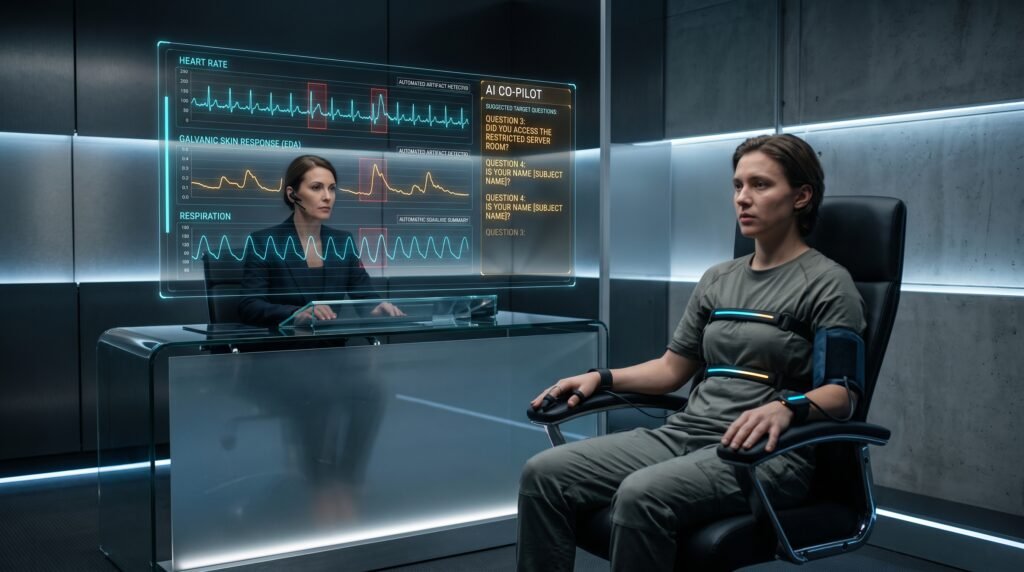
Figure 4.2: Real-time analytical interface of the AI copilot assisting the human examiner.
- Summary Processing: Analysis of case files to generate optimized questionnaires free from human bias.
- Artifact Detection: Identification within milliseconds of countermeasures, hyperventilation, or swallowing.
- Dynamic Normalization: Real-time adaptive cancellation of environmental noise.
4.3 Next-Generation Biotransducers and Non-Invasive Measurement
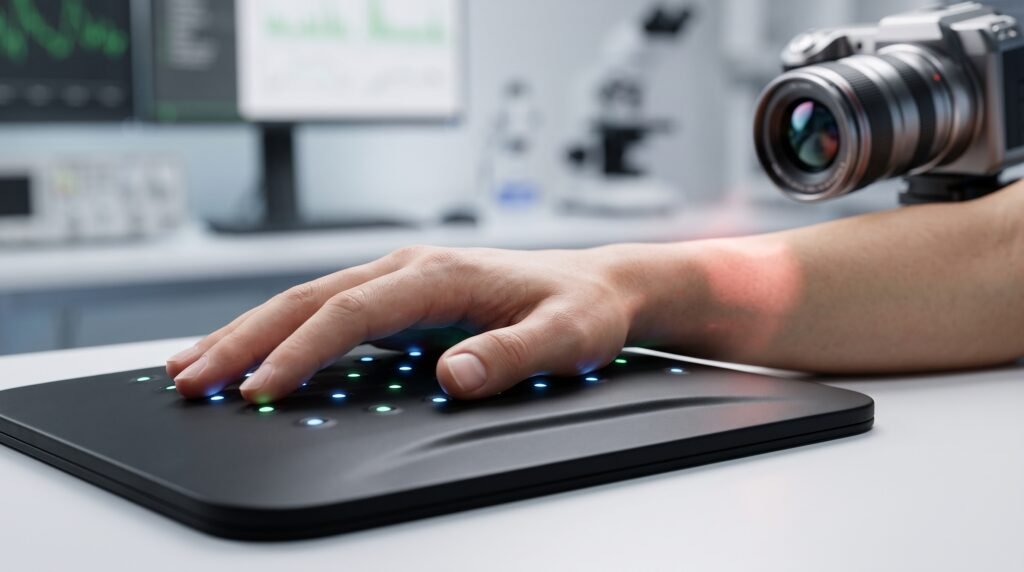
Figure 4.3: Padtrack 3D contact matrix and non-invasive laser beam/infrared reading.
Technological Architecture of the Futuristic Instrument
| Physiological Channel | Current Technology (Obsolete) | Futuristic Technology (Non-Invasive / Nanotechnological) |
| Cardiovascular / Pressure | Occlusive pressure cuff (Cuff) inflated to 60–90 mmHg. | Doppler Laser & Remote fPPG: Painless infrared pulse wave measurement. |
| Electrodermal Activity (EDA) | Rigid plates with Velcro® bands. | 3D Biometric Padtrack / Nanogels: Comfortable hand-rest matrix. |
| Vascular Response | Finger-clip plethysmograph. | FLIR HD Facial Thermography: Real-time periorbital blood flow. |
| Ocular Biomarkers | Not integrated. | Eye-Tracking & Laser Pupillometry: Synchronized pupil diameter and blinking. |
4.4 Conclusion: The Polygraph in the Service of Truth, Science, and Legality
| Era | Key Technical Characteristics |
| THE PAST | Hydrosphygmograph, ink pens, manual mechanical calibration, Keeler/Larson era. |
| THE PRESENT | Digital A/D conversion, Lafayette monopoly, BIS/EAR conflict, EPA expansion. |
| THE FUTURE | AI copilot, Doppler Laser sensors, HD thermography, and manufacturing democratization in China. |
Fundamental Premise
The polygraph is and always will be an auxiliary scientific tool. Its application must scrupulously adhere to the absolute voluntariness of the examinee, unyielding respect for human rights, and the legal framework in force within each nation. No algorithm or sensor can ever substitute for the critical judgment, methodological rigor, and professional deontology of the human examiner.
Comentarios recientes