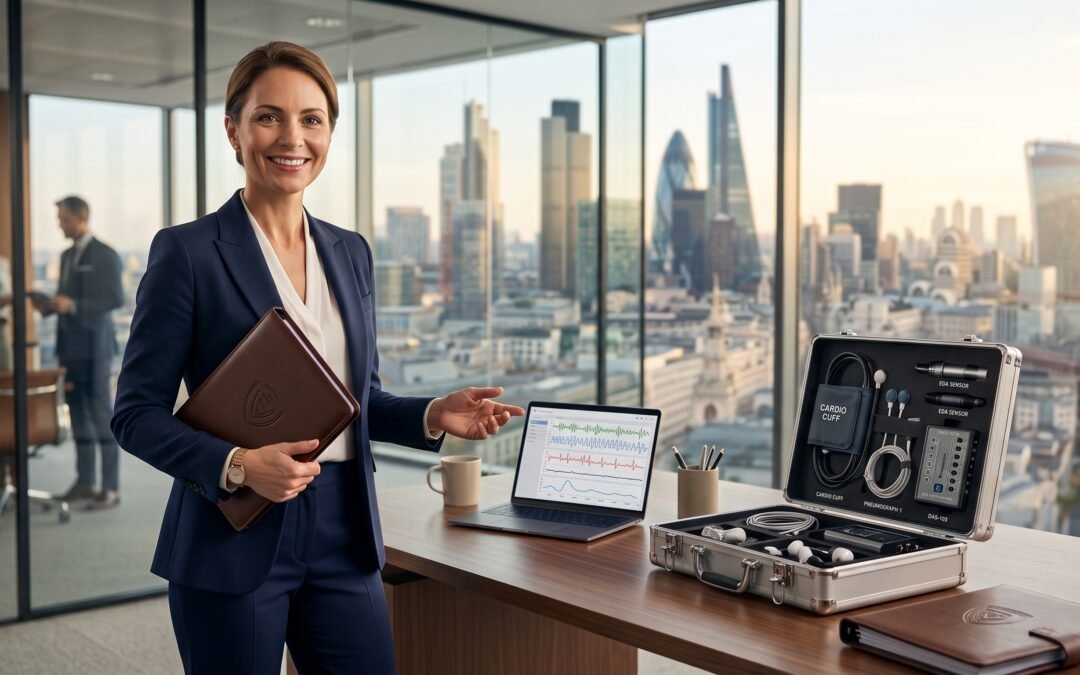
The Need for Certainty: Why Extrajudicial Truth Is the Greatest Asset of the 21st Century
In a hyper-connected society, information travels at lightning speed, and deliberate deception causes devastating personal, corporate, and psychological consequences. However, the vast majority of everyday conflicts that fracture relationships and family lives do not constitute criminal offenses, nor do they find timely answers in conventional courts, which are often overwhelmed, costly, and slow.
There is a universal human need to access the truth to restore peace of mind and resolve uncertainty. When suspicion destroys trust, the role of the Forensic Psychophysiological Credibility Assessment Expert (Certified Polygraph Examiner) emerges as an essential, elite expert profession across Europe.
The Driving Engine of the Private Market: Relationship Conflicts, Infidelity, and Restoring Trust
In the private consumer sector, emotional disputes, suspicions of infidelity, deceit in relationships, and unfounded jealousy represent the largest source of direct, continuous demand throughout Europe:
- Eliminating destructive doubt: In relationship crises where conclusive evidence is lacking, persistent suspicion erodes daily life. The psychophysiological examination provides an objective assessment that clarifies facts with absolute discretion.
- Restoring reputation and proving innocence: Very often, the falsely accused party voluntarily requests the test to scientifically demonstrate their fidelity and protect their relationship.
- Peace of mind and definitive closure: For both parties, establishing objective truth prevents rash breakups based on rumors and enables informed life decisions free from persistent uncertainty.
This private client segment prioritizes speed, strict confidentiality, and an empathetic, rigorous expert approach. With a standard fee of €400 to €500 per two-hour evaluation, these services provide examiners with steady case volume and recurring monthly revenue.
A Scientific Discipline Operating in Over 90 Countries
Far from being an experimental or media-driven novelty, psychophysiological assessment is a rigorous forensic discipline with a formal presence in over 90 countries, utilized by government security agencies, forensic bodies, and the private sector.
While its use for resolving personal and relationship matters is established in countries such as the United Kingdom, Spain, and the United States, high-purchasing-power markets across Central and Northern Europe—such as France, Germany, Italy, Switzerland, Austria, Denmark, Sweden, and Norway—face an unmet private demand due to a shortage of examiners certified under international standards (APA, ASTM, Europolygraph).
Extrajudicial Truth in the Corporate and Commercial Arena
Beyond private clients, the certified evaluator operates across two high-yield business sectors:
- Private investigations and partner disputes: Clarifying corporate disloyalty, non-disclosure breaches, or internal family estate disputes without initiating public court proceedings.
- Internal corporate security: Incidents of data theft, internal fraud, or sabotage where organizations must identify responsible parties swiftly and discreetly, safeguarding brand reputation from public trials.
A High-Yield, Low-Overhead Self-Employment Model
Practicing forensic psychophysiology delivers strong financial returns through a flexible, scalable self-employment framework:
- Negligible fixed overhead: Examiners do not require dedicated commercial real estate or long-term lease liabilities. Operations run via executive meeting rooms booked on-demand by the hour in premium business centers (such as Regus, Spaces, or similar networks) strictly when appointments are scheduled.
- Premium professional fees: Between €400 and €500 per standard private/relationship evaluation and up to €600 for corporate cases, typically collected upon service delivery.
- Daily billing capacity: Conducting up to four evaluations in a single working day yields a gross revenue potential of €1,600 to €2,000 per day, achieving net operating margins above 80% and rapid amortization of the initial setup investment.
Corporate Protection and Compliance: Investigating Internal Fraud Without Reputational Risk
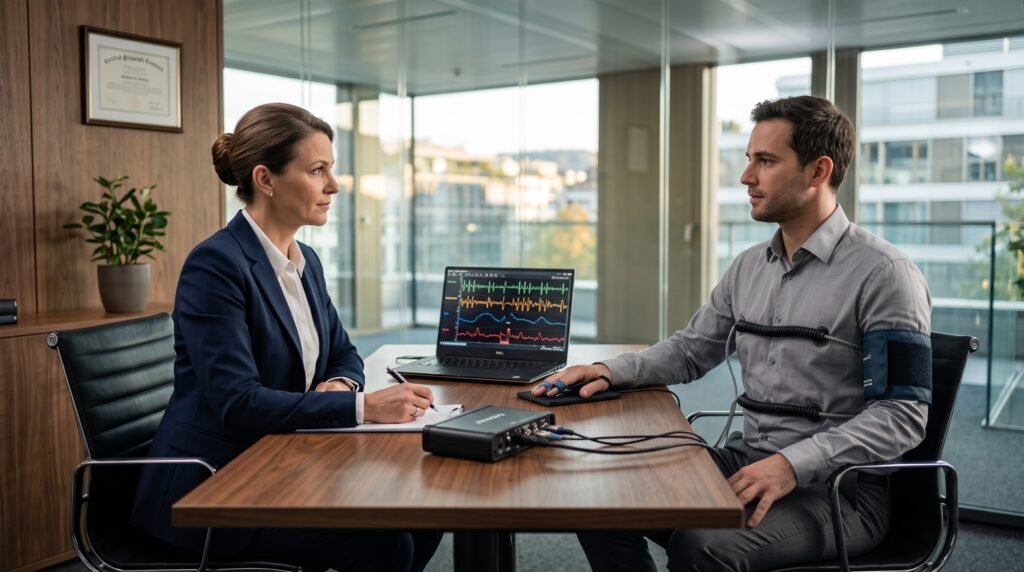
Across the European corporate landscape, internal fraud, asset misappropriation, operational sabotage, and the leakage of trade secrets or proprietary databases generate substantial financial losses. However, for executive boards, multinational corporations, and legal advisory firms, the primary hazard is often reputational damage: litigating an internal dispute in public courts exposes the enterprise to press leaks, shareholder skepticism, and an immediate erosion of market trust.
Compared to the slow pace and public exposure of criminal proceedings, Compliance, internal audit, and corporate security departments increasingly engage forensic psychophysiological assessment as an independent, confidential, and decisive investigative solution.
The Role of the Forensic Evaluator in the B2B Environment
Deploying a certified evaluator in a corporate context provides scientific rigor and external neutrality to resolve critical situations without disrupting daily operations:
- Investigating intellectual property and data leaks: Precisely isolating the internal human vector behind leaked patents or strategic data, avoiding widespread suspicion that damages team morale.
- Resolving fraud and embezzlement: Identifying culpable parties in accounting discrepancies, inventory manipulation, or illicit commissions, enabling extrajudicial restitution agreements before taking legal action.
- Methodological neutrality and independence: As accredited professionals operating under international standards (such as APA and Europolygraph), evaluators remain free from internal corporate bias, ensuring technical objectivity and adherence to legal and ethical protocols.
A High-Volume Corporate Market
Unlike individual private engagements, corporate cases represent the largest volume of billing per project for an independent examiner:
- Multi-evaluation packages: Corporate inquiries rarely involve a single individual; they typically require evaluating small groups of employees or executives with privileged access (between 3 and 8 evaluations per file).
- Premium B2B fees: European corporate evaluations command top-tier rates (€450 to €600 per assessment), generating between €1,500 and €3,500 across 1 to 2 focused working days.
- Operational mobility: No heavy infrastructure is required. The computerized equipment fits into a standard executive case, allowing on-site testing within client headquarters or in private executive suites booked by the hour.
Resolving within 48 hours an internal crisis that threatened months of litigation makes the polygraph examiner a strategic resource for senior leadership and legal counsel across Europe.
Screening for High-Trust Positions: The Value of Voluntary Psychophysiological Assessment and Its Ethical-Legal Framework in Europe
Hiring executives, asset custodians, and staff with access to classified data or critical infrastructure is a major risk-management challenge. Traditional selection methods—resumes, behavioral interviews, or psychometric testing—often prove insufficient for verifying critical background issues or undisclosed risks.
Across European jurisdictions where labor regulations do not explicitly prohibit its voluntary use, pre-employment and periodic screening serves as an effective preventive filter against internal security vulnerabilities and data leaks.
The Ethical-Legal Framework: Voluntariness and Informed Consent
Polygraph screening in European selection processes operates under clearly defined technical and ethical principles:
- Express informed consent: Evaluations are conducted on a strictly voluntary basis with candidates informed in detail of all evaluation topics prior to the examination.
- Standardized question protocols: Validated technical formats (such as the LEPET pre-employment protocol and ASTM/Europolygraph standards) eliminate subjectivity and ensure procedural fairness.
- Protection of fundamental rights: Questions focus strictly on job-relevant integrity factors (undisclosed criminal records, unauthorized competitor ties, financial crimes, disqualifying substance abuse), excluding political views, religious beliefs, and private personal matters.
Strategic Sectors of Application
Voluntary screening is utilized across high-responsibility roles:
- Private security and cash-in-transit: Verifying operational personnel entrusted with security systems, access codes, and asset logistics.
- Critical infrastructure and data centers: Screening personnel in telecommunications, secure logistics, cloud server infrastructure, and energy facilities.
- Executive appointments with trade secret access: Vetting executive hires with access to source code, algorithms, client lists, and strategic proprietary assets.
Recurring Revenue Opportunities for Examiners
The corporate pre-employment and screening sector provides examiners with recurring enterprise contracts and predictable demand:
- Annual corporate agreements: Corporate clients establish continuous screening agreements tied to hiring cycles and periodic integrity reviews.
- Time efficiency: Screening protocols are standardized and structured, enabling multiple sequential evaluations within a single day.
- Scalable fee structures: With average fees of €350 to €450 per candidate, conducting 6 to 8 candidate assessments yields €2,100 to €3,600 per completed screening project.
From Analog Systems to Psychophysiological Science: Standards, Technical Rigor, and International Norms
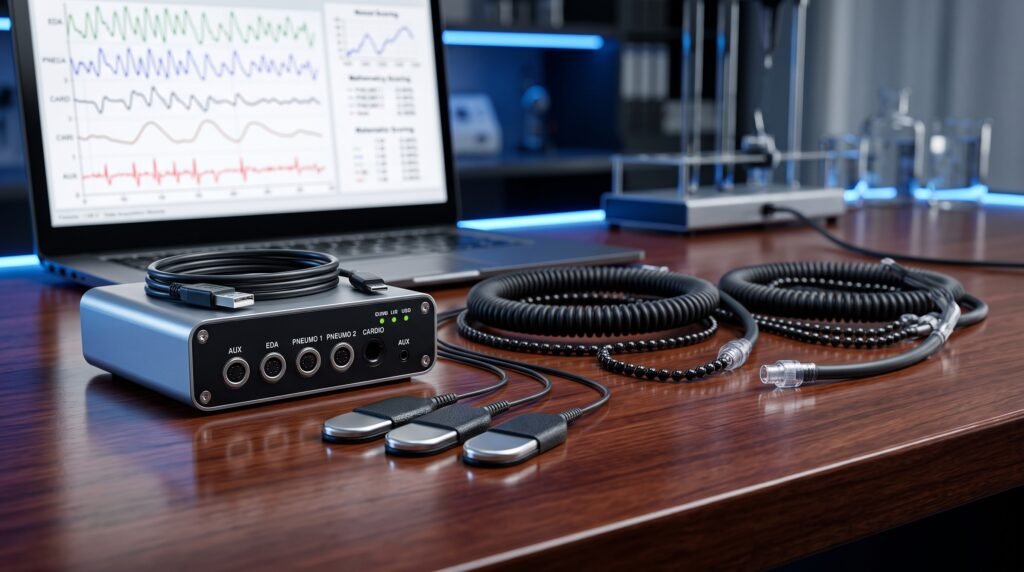
Popular culture has long depicted the polygraph as a mechanical device with ink needles on scrolling chart paper. Modern forensic practice has replaced this with computerized psychophysiological credibility assessment backed by neurophysiological and psychobiological research.
The contemporary examiner operates as an expert technician who records, processes, and standardizes involuntary autonomic nervous system (ANS) responses to structured verbal stimuli.
Physiological Recording Channels in Modern Instrumentation
Modern computerized data acquisition systems (such as the Stoelting Elite and equivalent certified instruments) use sensitive transducers to simultaneously capture multiple independent biometric channels:
- Electrodermal Activity (EDA): Captures minute shifts in skin conductance or resistance triggered by eccrine sweat gland activation.
- Dual Respiratory Channels: Thoracic and abdominal pneumatic assemblies tracking changes in respiratory rate, baseline adjustments, and breathing suppression patterns.
- Cardiovascular Activity: Continuously monitors relative blood pressure shifts, pulse volume, and heart rate via specialized sensors.
- Photoelectric Plethysmography and Movement Sensors: Detects peripheral microcirculation changes alongside seat and limb motion sensors designed to identify and neutralize physical countermeasures.
The Scientific Standard: Standardized Protocols and Empirical Scoring
The validity and repeatability of a psychophysiological test rely on strict adherence to methodologies validated by international regulatory bodies (including the American Polygraph Association – APA, ASTM International, and Europolygraph):
- Standardized comparison techniques: Implementation of validated formats such as the Utah Zone Comparison Technique (Utah ZCT), You-Phase, and investigative protocols like the LEMGQT (Law Enforcement Modified General Question Test) and LEPET.
- Systematic question formulation: Structured pre-test reviews ensure the evaluatee fully understands each question before testing, eliminating ambiguity and surprise.
- Empirical Scoring System (ESS): Algorithmic and mathematical scoring rules convert raw physiological signals into objective numerical values, reducing inter-examiner variability and grounding findings in tested probabilistic models.
Professional Accreditation: The Primary Barrier to Market Entry
Instrumentation requires an appropriately qualified examiner to be effective. Professional expertise demands comprehensive training across psychobiology, testimony psychology, advanced interview dynamics, and quantitative chart analysis.
Programs like the Europolygraph Professional Certification in Forensic Psychophysiology (20 ECTS / 525 academic hours including a mandatory supervised practical practicum) deliver the technical and ethical qualification needed to issue authoritative forensic reports for private individuals, enterprises, and legal professionals across Europe.
Lead Your Territory: Turnkey Partner Model for Exclusive Operations in Europe

The European credibility assessment market offers an exceptional commercial opportunity: sustained demand across private relationship matters and corporate fraud investigations, paired with a limited supply of certified examiners in key markets such as France, Germany, Italy, Switzerland, Austria, and the Nordic nations.
To address this regional shortage, Europolygraph offers the Europolygraph Local Partner (ELP) framework as a comprehensive turnkey business model: a professional self-employment path requiring lower capital investment than traditional franchises while offering a rapid path to profitability.
Candidate Profile and Professional Synergies
Prior polygraph experience is not required to enter the field, provided candidates possess analytical capability, ethical standards, and effective interpersonal communication skills. Comprehensive training prepares candidates from foundational principles upward, allowing professionals from diverse backgrounds to transition into an underserved market:
| Background Profile DOCX | Core Synergies & Competitive Edge DOCX | Business Application DOCX |
| Criminologists & Private Investigators | Investigation methodology, case assessment, and evidence handling. | Direct integration of polygraphy as a premium service within corporate and private investigation portfolios. |
| Forensic Psychologists & Psychiatrists | Behavioral analysis, psychopathology, and structured clinical interview skills. | Specialization in witness credibility, expert court reports, and dispute resolution. |
| Former Law Enforcement & Military Personnel | Operational security experience, procedural discipline, and tactical interview experience. | Leadership in internal corporate investigations, anti-fraud units, and commercial security screening. |
| Attorneys & Compliance Officers | Understanding of evidentiary standards, procedural law, and legal risk management. | Strategic advisory for executive boards and extrajudicial dispute resolution. |
| Entrepreneurs & HR Consultants | Business development acumen, client relationship management, and commercial networks. | Managing high-volume pre-employment screening contracts and local territory development. |
The Turnkey Package: Core Components Included
The program includes the educational, technological, and commercial assets required to launch operations under an established standard:
- Professional Qualification & International Certification: Full enrollment in the Professional Certification in Forensic Psychophysiology (20 ECTS / 525 academic hours, 13 core modules, and a 40-hour mandatory supervised practical practicum).
- Accreditation & Membership: One-year credentialed membership under the Full Member category of Europolygraph.
- Certified Forensic Instrumentation: Supply of a modern computerized polygraph system (Stoelting Elite or equivalent approved system) complete with high-precision biometric sensors.
- Digital Infrastructure & Local SEO Strategy: Deployment of a localized corporate website optimized for search engine visibility in the assigned language and territory to capture private and enterprise leads.
- Territorial Exclusivity & Case Referral: Exclusive regional operational rights, receiving all client inquiries routed from the Europolygraph central network within that territory, operating on a fee structure applied solely to accepted, completed cases.
Financial Model: Low Fixed Costs and High Operating Margins
Unlike retail or standard commercial franchises that require premises leases, fit-outs, and inventory, this model operates with variable overhead. Examiners book executive meeting spaces by the hour in international business centers (such as Regus or Spaces) strictly when appointments are confirmed.
| Operating Metric DOCX | Estimated Projections DOCX |
| Fee per standard private / relationship evaluation (2 hours) | €400 – €500 |
| Fee per corporate / B2B evaluation | €450 – €600 |
| Daily operational capacity | Up to 4 evaluations per day |
| Full-day gross revenue potential | €1,600 – €2,000 / day |
| Fixed overhead structure | €0 in permanent office leases (on-demand workspace) |
| Estimated Return on Investment (ROI) timeline | First 10 to 15 completed cases |
Territorial Admissions
Operating territories are assigned based on application review and candidate profile assessment to maintain geographic exclusivity for each authorized partner.
Contact Europolygraph for territory availability, economic dossiers, and admission interviews:
- Website: https://edu.europolygraph.org/– http://www.europolygraph.org
- Email: info@polygraph.training
Comentarios recientes